

Live dealer casino games let players experience real casino action from their computer or phone. Instead of computer-generated cards or wheels, these games use actual human dealers working in professional studios. The games stream live video to players while special technology reads the physical cards and dice to update the game in real time.
Live dealer games work by combining real dealers in broadcast studios with cameras, streaming technology, and optical character recognition software that instantly translates physical game results into digital data for online players. Multiple cameras capture different angles of the table while sophisticated systems ensure thousands of players can watch and bet on the same game at once.
The operations behind these games involve much more than a dealer and a camera. From the studio lighting and equipment to the security systems and back-end software, live casino games require careful coordination between technology and trained staff. Understanding how these elements work together reveals why live dealer games have become one of the most popular ways to gamble online.
Core Technology Behind Live Dealer Casino Games
Live dealer games rely on specialized hardware and software working together to deliver real-time casino action. The technology handles video transmission, reads physical game outcomes, and ensures fair play across every hand and spin.
Live Streaming Infrastructure
Live dealer games use high-definition cameras positioned at multiple angles around gaming tables. These cameras capture every card flip, wheel spin, and dice roll in real time. The video feeds travel through dedicated streaming servers that compress the footage without losing quality.
Most platforms use adaptive bitrate streaming. This adjusts video quality based on a player’s internet speed. If the connection slows down, the stream drops to lower resolution automatically to prevent buffering.
Latency matters for live games. The delay between the dealer’s action and when players see it on screen needs to stay under two seconds. Streaming infrastructure uses content delivery networks (CDNs) with servers spread across different regions. This reduces the physical distance data travels and keeps streams smooth.
Optical Character Recognition (OCR)
OCR technology reads the physical cards, dice, and roulette results from the gaming table. Small cameras focus on specific areas where game outcomes appear. The software scans these images dozens of times per second.
The system identifies card suits and numbers, roulette wheel positions, and dice faces. It converts these images into data the game software can process. This happens instantly so players see their wins or losses update on screen right as the dealer reveals results.
OCR removes the need for dealers to manually enter results. It also prevents human error in recording outcomes. The technology works even with worn cards or in varying lighting conditions because it’s trained to recognize slight variations in how cards and numbers appear.
Game Control Units (GCUs)
Each gaming table connects to a Game Control Unit. This small device acts as the bridge between the physical table and the online platform. The GCU is about the size of a shoebox and sits underneath or beside the gaming table.
The unit receives data from cameras and OCR scanners. It encodes the video feed and transmits it to streaming servers. The GCU also syncs the physical game with what players see on their screens.
Every action at the table passes through the GCU. When a dealer shuffles cards or spins a wheel, the unit timestamps these events. It ensures all players see the same game state at the same time.
Secure Random Number Generation
Live dealer games use physical randomness from real cards, wheels, and dice. However, some game features still require Random Number Generators (RNG). Side bets and certain game variations need digital randomization.
These RNG systems use complex algorithms certified by gaming authorities. The software generates unpredictable number sequences that determine outcomes. Regular testing by third-party auditors confirms the RNG produces truly random results.
Casinos combine physical and digital randomness depending on the game type. A live blackjack game uses real shuffled decks while a digital slot feature in the same lobby relies on RNG. Both methods undergo strict regulation to ensure fairness.
Role of Professional Dealers
Professional dealers serve as the bridge between digital technology and authentic casino atmosphere. They manage game flow, engage with remote players through chat, and maintain the same standards required in physical casinos.
Dealer Training and Certification
Live casino dealers complete rigorous training programs before they appear on camera. Most training courses last 4-8 weeks and cover game rules, card handling techniques, and studio equipment operation.
Trainees learn multiple games including blackjack, roulette, baccarat, and poker variants. They practice dealing thousands of hands to develop speed and accuracy. The training includes camera presence and communication skills since dealers must speak clearly while managing game operations.
Many studios require dealers to obtain gaming licenses from regulatory authorities. These certifications verify background checks and confirm knowledge of gambling regulations. Dealers must pass practical exams that test their ability to handle chips, shuffle cards, and operate gaming equipment without errors.
Interaction with Players
Dealers communicate with players through live chat systems displayed on studio monitors. They greet players by username, announce bet results, and respond to questions in real-time. This interaction creates a personal connection that separates live games from automated software.
Professional dealers maintain a friendly but neutral demeanor regardless of player wins or losses. They speak multiple languages in international studios, often switching between English, German, or other languages during the same game session.
The dealers cannot see players through cameras but read their chat messages and betting patterns. They acknowledge big wins with enthusiasm and keep conversation flowing during slower moments to maintain engagement.
Game Management Skills
Dealers operate complex studio setups while managing game timing and procedures. They scan cards using optical character recognition (OCR) technology, spin wheels at consistent speeds, and verify bet placements through multiple camera angles.
Time management is critical since dealers must maintain specific game pace requirements. A blackjack dealer typically completes 50-70 hands per hour while interacting with players. They track betting windows, manage side bets, and coordinate with pit bosses for unusual situations.
Dealers also monitor technical systems for streaming issues or equipment malfunctions. They follow strict protocols for card changes, shoe replacements, and table maintenance. Studios employ shift supervisors who watch multiple tables simultaneously to ensure dealers follow proper procedures and maintain game integrity.
Studio Setup and Equipment
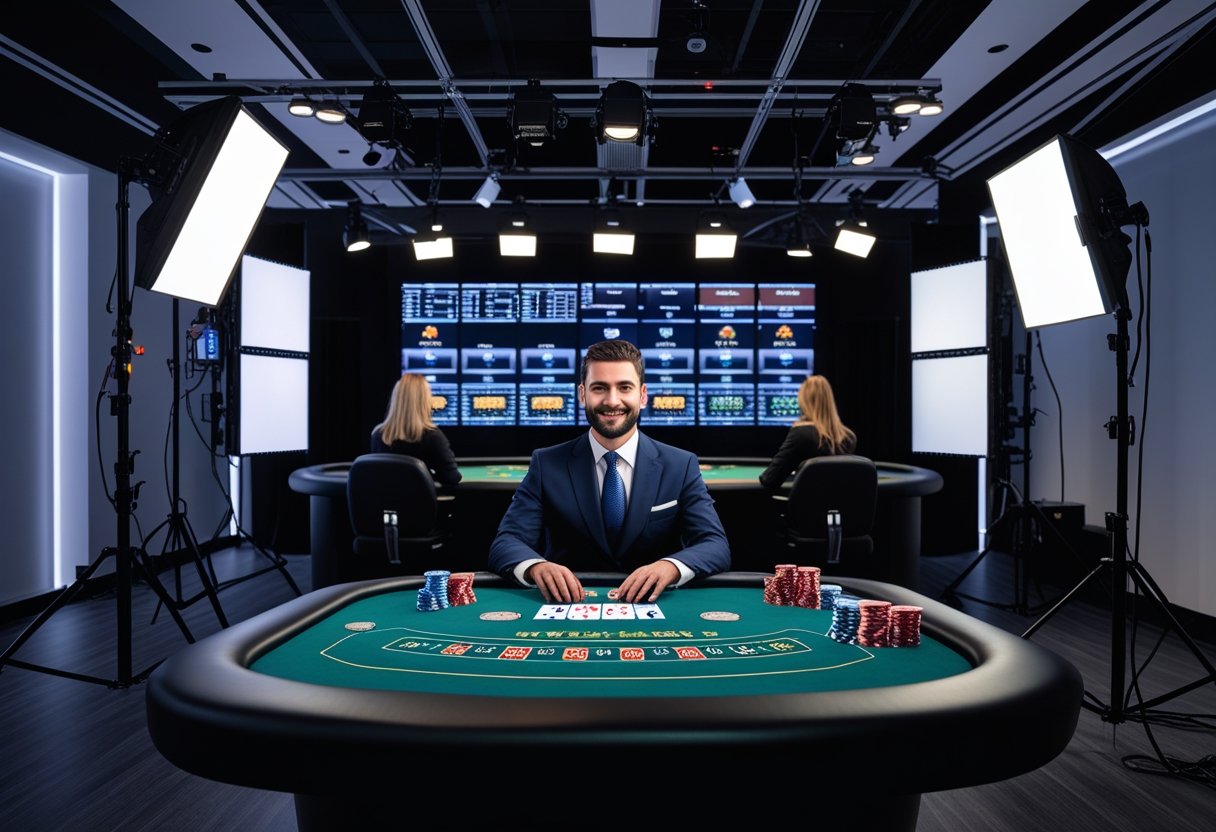
Live dealer studios operate with professional-grade technology that captures every card flip and dice roll in real time. These facilities run 24/7 with specialized equipment designed to deliver smooth, high-quality streams to players worldwide.
Camera Configurations
Multiple cameras work together to show different angles of each game table. Studios typically use 4-8 cameras per table, with some positioned overhead to capture the full layout while others focus on close-up shots of the cards or wheel.
Most studios stream at 1080p resolution at 60 frames per second. This quality level provides clear views without requiring excessive bandwidth that would slow down gameplay.
The cameras connect through fiber optic networks to maintain low latency. Even a few seconds of delay would ruin the live experience, so studios invest heavily in high-speed connections that keep the stream synchronized with real-time action.
Lighting and Sound Engineering
LED lighting systems illuminate the tables without creating glare or hot spots on camera. The lights are positioned to eliminate shadows on cards and game equipment while maintaining a casino atmosphere.
Sound engineers balance multiple audio sources to create clear communication. Dealers wear small microphones to chat with players, while ambient casino sounds play at controlled levels in the background.
Studios use soundproofing materials to prevent outside noise from disrupting the broadcast. This matters because dealers interact with players through voice, and any background interference affects the gaming experience.
Physical Casino Game Tables
The gaming tables are real casino-grade equipment, not props. Roulette wheels, blackjack tables, and baccarat setups meet the same standards as physical casinos.
Tables include specialized surfaces that help cameras capture card values clearly. Many use green felt with subtle patterns that provide contrast without distracting from the game action.
Each table has built-in monitors that let dealers see player bets and chat messages. These screens are angled away from cameras so they remain invisible to players watching the stream.
Back-End Systems and Operations
Live dealer games rely on sophisticated software systems that process player actions, manage bets, and keep everyone’s screen in sync. These systems handle thousands of simultaneous players across multiple tables while maintaining accuracy down to the millisecond.
Real-Time Data Processing
The back-end infrastructure processes game data as it happens at the table. When a dealer draws a card or spins the roulette wheel, optical character recognition (OCR) technology scans the result and sends it to the game server instantly.
Game servers validate each outcome and distribute the information to all connected players. This happens in under 200 milliseconds to maintain the live feel. The system tracks every card dealt, every chip placed, and every wheel spin in a database.
Multiple redundant servers work together to prevent downtime. If one server fails, another takes over without interrupting gameplay. This setup allows studios to handle peak traffic times when thousands of players join tables at once.
Betting Management
The betting system locks and unlocks wagering windows based on the dealer’s actions. Players see a countdown timer that shows how long they have to place bets before the dealer announces “no more bets.”
The software validates each bet against the player’s account balance and the table limits. It rejects bets that exceed available funds or fall outside minimum and maximum amounts. All accepted bets get recorded in the player’s transaction history with timestamps.
When the round ends, the system calculates wins and losses for every player at the table. Winnings transfer to player accounts automatically. The entire settlement process completes in seconds.
Player Interface Synchronization
Each player’s screen must show the same game state at the same time. The synchronization system sends video feeds, game data, and chat messages to thousands of devices with minimal delay.
Players on different devices and internet speeds see slightly different delays in the video stream. The software adjusts for these differences by buffering the betting interface to match each player’s video latency. This prevents players from placing bets after they’ve already seen the outcome.
The system monitors each connection’s quality and drops video resolution if bandwidth becomes limited. Players with poor connections still receive accurate game data even if their video quality suffers.
Security and Fairness Protocols
Live dealer casinos implement multiple layers of security to protect player data and money while ensuring every game outcome remains genuinely random and unmanipulated. These measures combine encryption technology, independent testing, and real-time monitoring systems.
Encryption and Data Protection
Live dealer platforms use 128-bit or 256-bit SSL encryption to protect all data transmitted between players and casino servers. This same encryption standard secures online banking transactions and prevents unauthorized access to personal information, payment details, and gameplay data.
The studios also implement secure payment gateways that tokenize financial information. Players’ credit card numbers and bank details never appear in plain text within the casino’s systems. Access to studio facilities and control rooms requires biometric authentication or keycard systems to prevent unauthorized personnel from interfering with games.
Data protection extends to video streams as well. The live feeds use encrypted connections that prevent tampering or injection of altered footage. Gaming servers store records of every bet, card dealt, and wheel spin in secure databases that regulatory bodies can audit at any time.
Third-Party Audits
Independent testing agencies like eCOGRA, iTech Labs, and Gaming Laboratories International regularly audit live dealer operations. These organizations verify that random number generators function correctly, studio equipment operates as intended, and game outcomes match statistical probabilities.
Auditors review thousands of game rounds to confirm the house edge aligns with published rates. They also inspect physical equipment like card shoes, roulette wheels, and shuffling machines for any defects or manipulation. Studios must pass these audits to maintain their gaming licenses.
Most reputable live dealer providers display their certification badges and audit reports directly on their websites. Players can verify these credentials by checking the testing agency’s database of certified operators.
Anti-Fraud Measures
Casinos monitor player accounts and betting patterns using specialized software that flags suspicious activity. Multiple cameras capture every angle of the gaming table, recording dealers’ actions and card distributions in high definition. These recordings remain stored for extended periods for dispute resolution.
Dealers receive extensive training to spot common cheating attempts and follow strict protocols for card handling and chip management. Studio supervisors watch live feeds continuously to catch any irregularities. The optical character recognition technology that reads cards and wheel results creates an additional verification layer, as it independently confirms outcomes that cameras also record.
Common fraud prevention tools include:
- Real-time bet validation systems
- IP address tracking
- Device fingerprinting
- Behavioral analysis algorithms
- Maximum bet limits per round